Electric Winch Power Supply: 230 V, 400 V or DC
In short
- 400 V three phase is the workhorse for industrial electric winches: full power, full duty cycle and the right choice for most plants, yards and decks.
- 230 V single phase suits lighter loads and sites without three phase, but it limits power and continuous running.
- DC and battery options serve mobile, remote or vehicle mounted work where there is no mains at all, each with its own current and cabling rules.
With an electric winch the supply is not a detail you settle at the end, it is the first thing that decides what the winch can do. The same frame and drum behave very differently behind 230 volts single phase, 400 volts three phase or a direct current pack, and a unit ordered for the wrong supply will either trip, run hot or never reach its rated duty. Getting the voltage and phase right before anything else saves a great deal of trouble on site.
Why the supply decides the winch
A winch motor turns electrical power into pull, and how much power it can draw depends on the voltage, the phase and the current the supply can deliver. Three phase gives a smoother, stronger motor for a given size, single phase is simpler and more widely available but limited, and direct current frees you from the mains entirely at the price of a battery to feed and manage. The supply also sets the cabling, the protection and the starting behaviour, so it ripples through the whole installation, not just the motor.
400 V three phase: the industrial standard
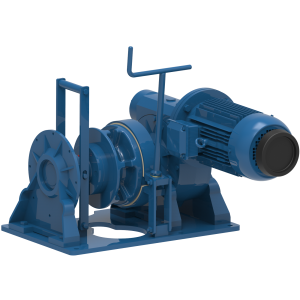
For industry, 400 volt three phase is the default and for good reason. A three phase motor delivers full torque smoothly, starts without the heavy current penalty a large single phase motor suffers, and sustains a long duty cycle without overheating, which is exactly what a plant, a shipyard or a deck needs from a working winch. It is the supply behind most of our industrial range, from compact units up to the heavier frames, because it lets the motor work at its rating all day. A typical choice on a powered site is the SB 300 E, and for heavier pulls the FD 306 E shows what three phase makes possible in a single drum. If your building has three phase, this is almost always the supply to specify.
230 V single phase: lighter duty, simpler site
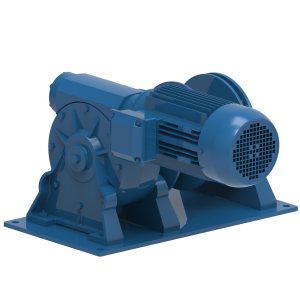
Not every site has three phase, and not every job needs it. For lighter loads, short duty cycles and small workshops a 230 volt single phase winch is the practical answer, plugging into an ordinary supply without a special installation. The trade off is real: single phase limits the power a motor can draw, the starting current is high relative to the supply, and continuous heavy running is not its strength. Within those limits it is genuinely useful, and our single phase units such as the MCW 500 SPH are built for exactly that lighter, intermittent duty where a three phase supply is simply not available.
| Supply | 230 V single phase | 400 V three phase | DC / battery |
| Typical use | Light duty, small sites | Industrial, full duty | Mobile, remote, vehicles |
| Power available | Limited | High | Limited by the pack |
| Continuous running | Short duty | Long duty | Depends on charge |
| Starting current | High for the supply | Manageable | Battery dependent |
| Where it fits | Workshops without three phase | Plants, yards, decks | Field, trucks, off grid |
DC, battery and special supplies
Some work happens where there is no mains at all, on a vehicle, a remote structure, a barge or a temporary site. For these a direct current winch, fed from a battery or a vehicle system at 12, 24 or 48 volts, keeps the job moving off grid. The motor and the wiring are designed around the lower voltage and the higher current it draws, so cable sizing and battery capacity become the limiting factors rather than the motor itself. Special supplies also cover marine voltages and frequencies, and softer starting where a sensitive generator or a long cable run cannot tolerate a hard inrush. The rule is the same as everywhere else: match the winch to the power that is actually present, not the power you wish you had.
Duty cycle, inrush current and cabling: the details that bite
Two installations on the same voltage can still behave differently because of duty cycle and cabling. An electric motor is rated for a percentage of running time, and asking a light duty unit to run continuously is how windings cook. Starting current matters too, since the inrush when a motor picks up a load can be several times its running current, which a weak supply or a small generator may not tolerate. Long or thin cable runs drop voltage and rob the motor of power at the far end, just as a long hose starves a pneumatic winch. The European standard EN 60204-1 covers the electrical equipment of machines, and IEC 60038 fixes the standard voltages these winches are built around, which is why a clear statement of your real supply lets us size the motor, the protection and the cable correctly the first time.
Where the supply bites in heavy industry
On the kind of sites we equip, the supply question is rarely abstract. A steel mill or a foundry runs three phase everywhere, so a 400 volt winch drops straight in and works its full duty beside the furnaces and transfer lines. A shipyard is more mixed: the main halls have three phase, but a winch sent to a remote berth, a dry dock corner or a vessel under fit out may have to make do with single phase or a generator, and that changes the rating you can honestly promise.
Offshore and on barges the picture changes again. Deck power may be limited, generators are precious, and a hard motor inrush can disturb other equipment, so soft starting and honest cable sizing earn their place. On mobile and field work, from cable pulling rigs to recovery vehicles, there is often no mains at all, and a DC winch fed from the vehicle is the only option that travels with the job.
The thread through all of it is that the supply is a property of the site, not the winch, and the winch has to bend to it. A unit specified for a supply that is not there, or run far beyond what the cable and generator can feed, will disappoint no matter how good the data sheet looked. We would rather ask three blunt questions about your power at the quotation stage than watch a good winch trip on its first shift because the supply behind it was never checked.
Choosing the supply, then the winch
Decide the supply first, then the winch follows naturally. If you have 400 volt three phase, specify it and enjoy full duty. If you only have single phase, accept the lighter rating and size honestly. If there is no mains, plan the DC pack and its cabling. The drive itself is a separate question we cover in our guide to choosing electric, hydraulic or pneumatic, and the full electric programme is in our winch catalogue. Tell us the voltage, the phase, the duty cycle and the cable run, and we match the winch to your power rather than the other way round.
Frequently asked questions
Can I run an industrial electric winch on a normal 230 V socket?
Only if it is built as a single phase 230 V unit and rated for the load and duty. Most full power industrial winches are 400 V three phase and will not run, or will run badly, on a single phase socket. Match the winch to the supply you actually have.
Why is 400 V three phase better for heavy duty?
Three phase gives a stronger, smoother motor for its size, a gentler starting current and a longer continuous duty cycle without overheating. That is what sustained industrial pulling needs, which is why it is the default on plants, yards and decks.
When does a DC or battery winch make sense?
When there is no mains: on vehicles, remote structures, barges or temporary sites. A DC winch runs off a battery or vehicle system, with cable sizing and battery capacity as the main limits, so plan those around the duty you expect.
Does cable length affect an electric winch?
Yes. A long or undersized cable drops voltage and starves the motor at the far end, reducing pull and risking nuisance trips. Size the cable for the run and the starting current, in line with EN 60204-1, and the winch will deliver its rating.